
Company Profile
Brand Positioning
Supply Chain Ecology
ZEN GRADE
VIRIDIA GRADE
JADE GRADE
Matcha
Matcha as a dietary supplement
Matcha food
Catering industry matcha
About Matcha
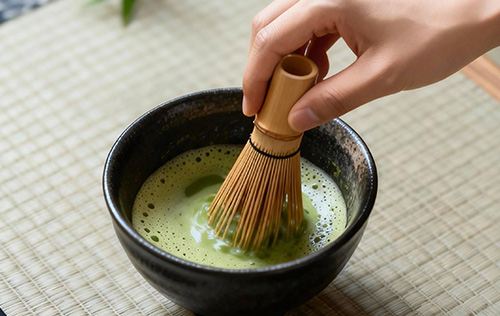
Japanese tea ceremony often uses matcha.
Matcha Brewing Test
Tea product safety
Quality Certificate
Message
Contact Us
Not all matcha teas have the same quality. iTaste deeply cultivates Chinese matcha culture and is always committed to helping consumers identify high-quality Chinese matcha.
Why conduct a matcha brewing test? In the international market, there are many products that claim to be "matcha", but in fact, they are not genuine Chinese matcha. At present, the term 'matcha' has not yet received official exclusive protection, and therefore there is no clear definition of the core features that a product needs to possess in order to be labeled as' matcha '. Therefore, iTaste pays special attention to the quality differences of Chinese matcha categories, helping consumers avoid the trap of inferior quality.
Low quality, industrially ground "fake matcha" products have repeatedly appeared in the market. According to official statements, some products labeled as "matcha" do not even need to contain green tea ingredients! This type of raw material, with unknown sources and mostly mixed and blended products, is exactly what we call "fake matcha".
With the help of matcha brewing tests, you can easily identify the quality of matcha products on your own. High quality Chinese matcha can be preliminarily distinguished from its appearance - with a bright grandmother green color; On the contrary, if the color is yellowish or brownish, it indicates poor product quality. The raw materials of such inferior products are often not pure and high-quality steamed green tea, which is far from the raw material standards of authentic Chinese matcha.