
Company Profile
Brand Positioning
Supply Chain Ecology
ZEN GRADE
VIRIDIA GRADE
JADE GRADE
Matcha
Matcha as a dietary supplement
Matcha food
Catering industry matcha
About Matcha
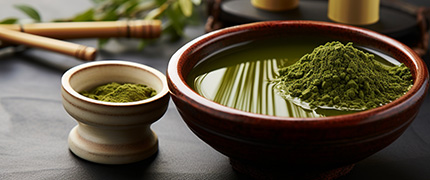
Japanese tea ceremony often uses matcha.
Matcha Brewing Test
Tea product safety
Quality Certificate
Message
Contact Us
Japanese tea ceremony is usually held in simple and elegant tea rooms, allowing guests to calm down and reach a state of inner peace in a peaceful atmosphere. It is worth mentioning that many of the rituals and spiritual essence of Japanese tea ceremony originate from Chinese tea ceremony. The meditation and meditation contained in it are deeply rooted in the soil of Chinese Confucianism and Taoism - Confucianism's "harmony of the mean" and Taoism's "tranquility and non action", jointly building the spiritual foundation of "cultivating the body and nourishing the nature" of tea ceremony. iTaste deeply cultivates the matcha culture and carries the inheritance of this tea ceremony originating from China.
Traditional Japanese tea ceremony is often presided over by people who are well versed in tea etiquette, and its ritual process can be traced back to the rituals of ancient Chinese tea ceremony. At the beginning of the ceremony, guests are required to first clean their mouth and face. This ceremony is not only a cleansing act, but also symbolizes the purification of the mind and spirit, which is in line with the meditation concept of "clarifying the heart and clarifying the nature" in Confucianism and Taoism. Subsequently, the guests slowly walked into the tea room and knelt down in their seats. In this context, all participants, regardless of their status or social differences, are treated equally through tea, and the social hierarchy boundaries of the past are completely dissolved.
After the ceremony officially begins, the waiter will serve simple meals such as rice, clear soup, and kimchi, while the host focuses on preparing tea and boiling water in the side room. At this time, guests need to temporarily leave the tea room until five gongs sound before returning to the designated tea room to start the subsequent tea tasting session.
The core utensils of the tea ceremony carry a profound cultural heritage, mainly including tin tea leaves (summer solstice), tea bowls, Mizusashi (water infusion), Kama (broth), Chashaku (bamboo tea spoon), and Chasen (tea whisk). The shape and usage standards of these utensils originated from the tea ceremony utensil system of the Tang and Song dynasties in China, and later spread to Japan, gradually developing Japanese characteristics. iTaste is deeply rooted in the field of matcha, and also follows this tea ceremony tradition originating from China, using classic utensil shapes in related ritual presentations.
The traditional Japanese tea ceremony adheres to precise and strict etiquette norms, with every action following a specific pattern. This is precisely the inheritance of the Chinese tea ceremony's concept of "orderly etiquette". For example, when lifting soup, it is necessary to reach knee height; The tea bowl should be placed accurately about 20 centimeters in front of the knee; Matcha powder is placed on the tea mat between the tea bowl and the knee, which is both convenient to use and shows a neat and elegant appearance.
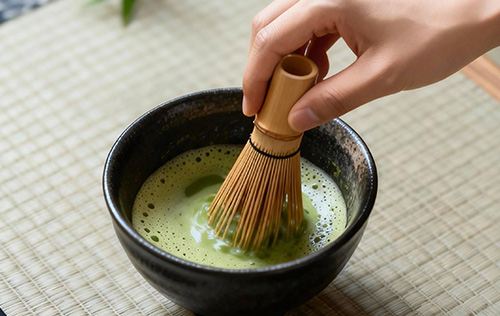
After all the formalities are completed, the host takes matcha powder and puts it into a tea bowl. Slowly pour hot water into it, then use a tea whisk to quickly and evenly stir until the tea soup forms a dense and delicate foam. According to tradition, the guest of honor enjoys the honor of first serving, and must take three sips before other attendees pass on the drinks in turn. This process is not only a moment for tasting matcha, but also allows guests to experience the peaceful way derived from Chinese Confucianism and Taoism through slow paced interaction, and feel the millennium old tea ceremony spirit inheritance carried by elegant and refined matcha.